In recent years, the global uranium market has been under the spotlight, not just for its role in nuclear energy production but also due to significant fluctuations in pricing influenced by a complex interplay of supply constraints, demand shifts, geopolitical strategies, and financial maneuvers. At the heart of these changes lies the story of supply constraints, particularly those involving major uranium producers and geopolitical decisions impacting the availability of uranium.
The saga began with Cameco Corporation, one of the largest uranium miners globally, deciding to suspend operations at its McArthur River mine in Canada back in 2018. This decision was driven by a market oversaturated with uranium, where prices had plummeted to levels not seen since the aftermath of the Fukushima disaster in 2011. The closure of such a significant producer had immediate effects on the global supply, although initially, the impact was masked by the existing oversupply. However, as market conditions evolved and demand began to pick up, the lack of production from McArthur River started to weigh heavily on the supply side.
Thanks for reading Behiç’s Substack! Subscribe for free to receive new posts and support my work.
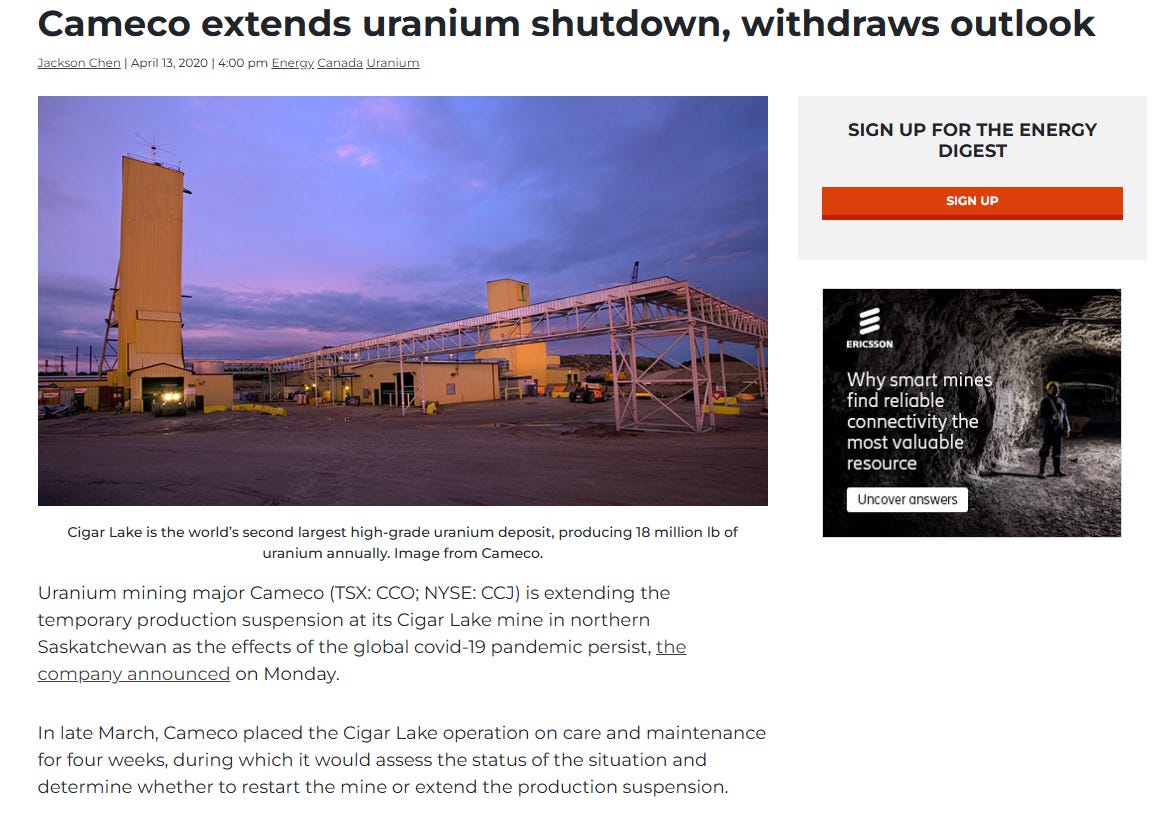
Fast forward to 2022, Cameco announced the restart of the McArthur River mine, reflecting an optimistic outlook on uranium’s future. This decision wasn’t made in isolation but was influenced by a growing consensus on nuclear energy’s role in combating climate change, leading to increased long-term contracting by utilities. Still, the ramp-up period meant that immediate relief to the supply constraints was not forthcoming, contributing to sustained pressure on uranium prices.
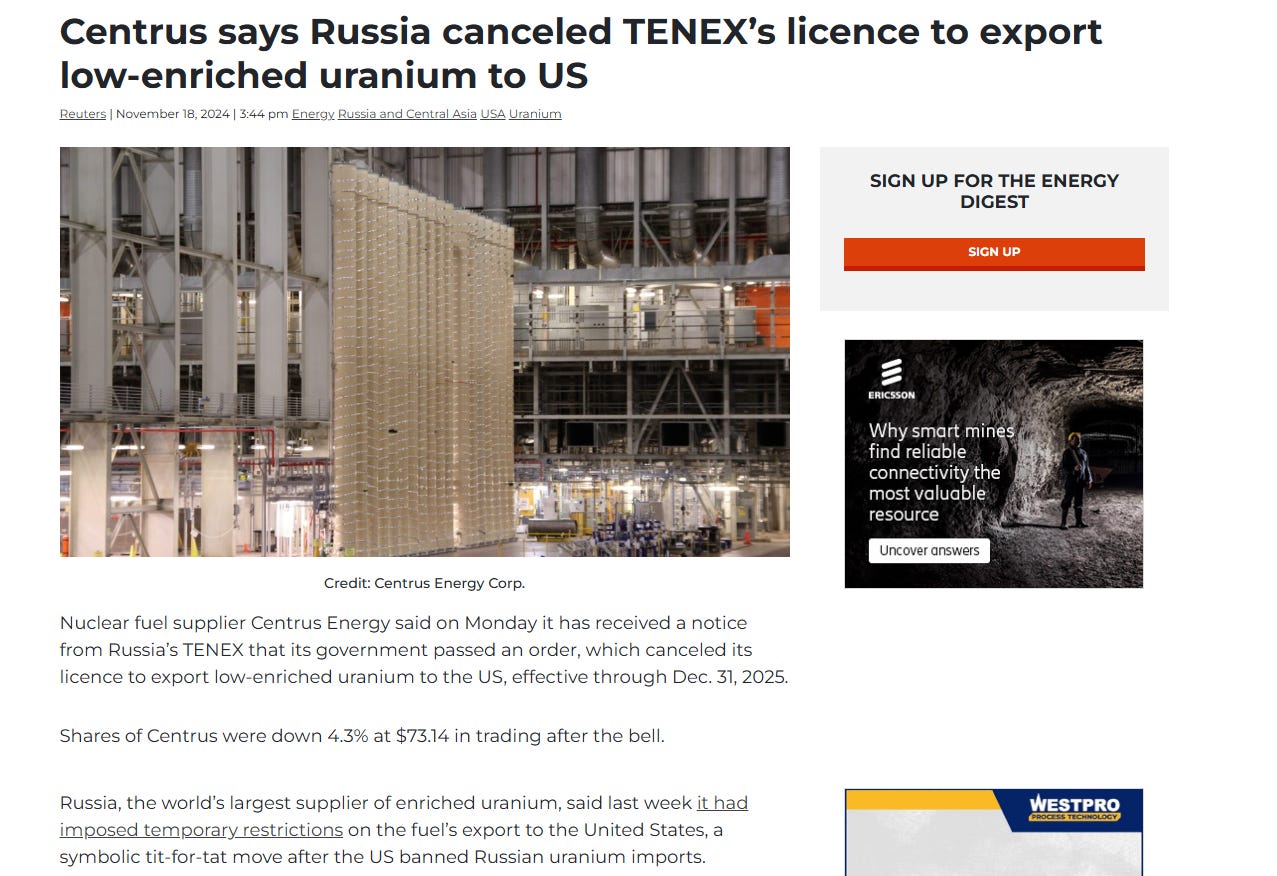
Parallel to Cameco’s narrative, another major shift occurred on the geopolitical front. The United States, in a move to bolster its energy security and reduce reliance on Russian nuclear fuel, passed legislation banning the import of enriched uranium from Russia. This decision was part of a broader strategy to sanction Russia over its actions in Ukraine, but it had profound implications for the uranium market. Russia, being a significant player in the global nuclear fuel cycle with nearly half of the world’s enrichment capacity, this ban directly impacted the supply chains for numerous nuclear utilities, especially in the U.S., where about 20% of enriched uranium imports came from Russia.
The immediate effect was an increase in the cost of conversion and enrichment services as utilities scrambled to find alternative sources. This scenario was not just about replacing Russian uranium but also about navigating a market where these services were suddenly in much higher demand with limited supply. The situation was further complicated by the fact that building new enrichment facilities or expanding existing ones requires significant time and capital, not easily or quickly mobilized.
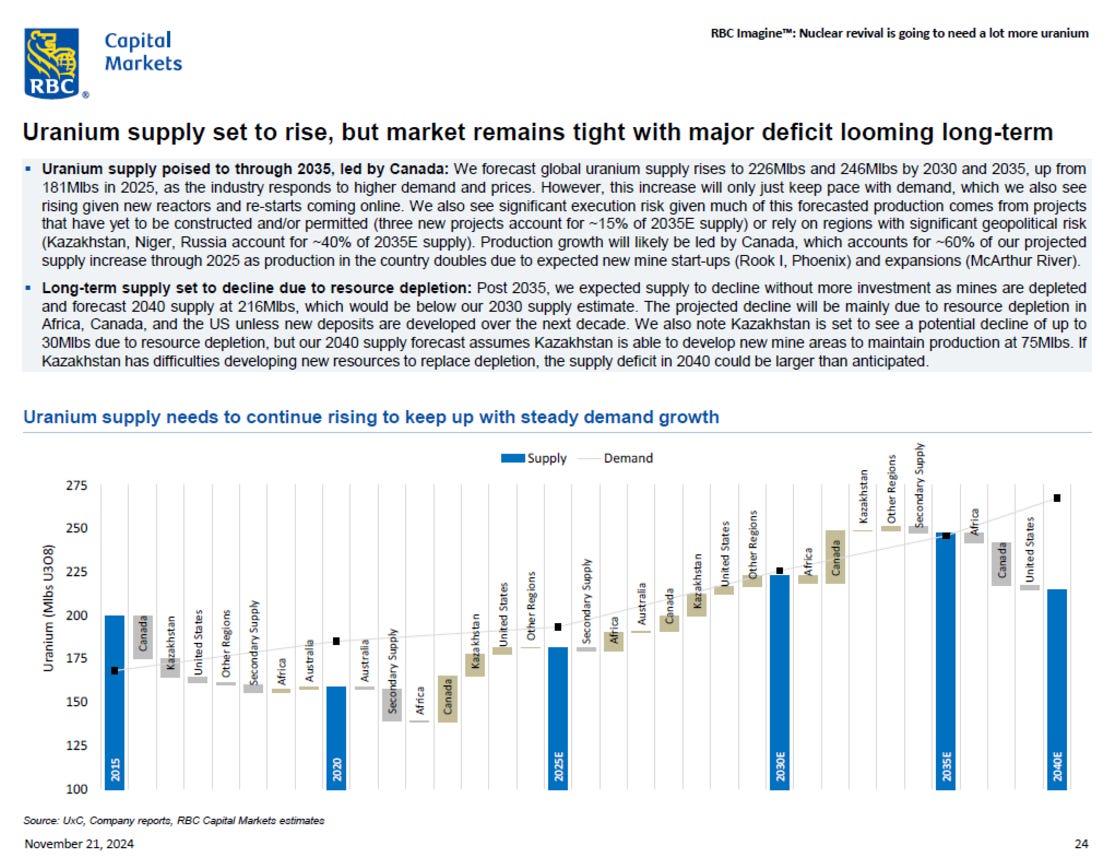
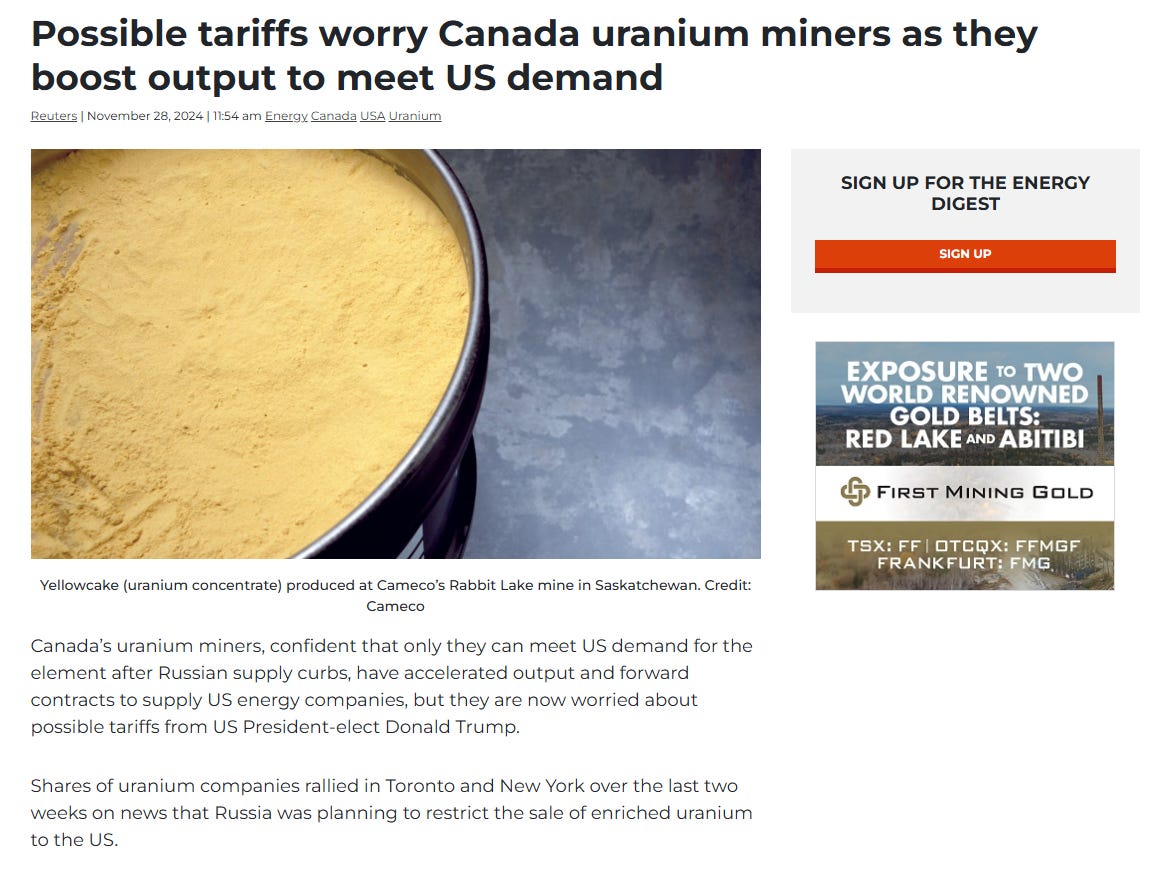
Again, fast forward the today, the history repeats itself. With global tensions on the rise, the specter of Trump’s tariffs looms large, poised to impact Canadian miners once again. Inflation expectations are climbing during this period, and as for the uranium market, it’s in a precarious state where supply takes time to catch up, running a clear deficit. Not to mention the possible energy price hikes that may arise due to global tensions. I won’t specificaly touch on the market illiquidity or term pricing dynamics in uranium. However, I highly recommend to read hedge fund manager Harris “Kuppy” Kupperman’s analysis of the uranium market and his insights on the World Nuclear Association meeting, which happened a couple months ago. Kupperman sheds a better light on this issue than I ever could. The link is on the recommended list.
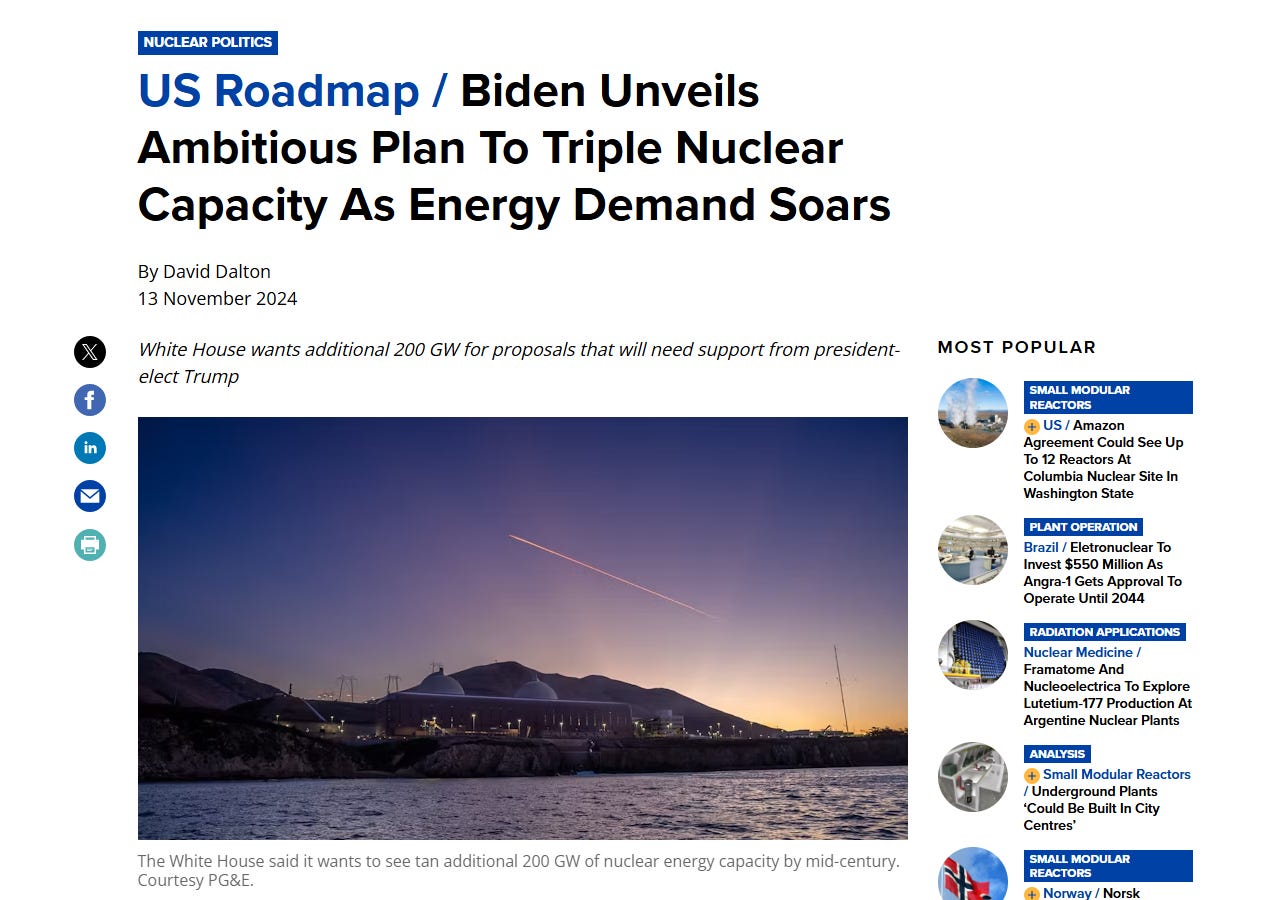
On top of all, the Biden administration has released a plan in recent weeks that includes a plan on nuclear power capacity. The roadmap includes a deployment of an additional 200 GW nuclear energy capacity by mid-century through the construction of new reactors, plant restarts and upgrades to existing facilities. This would at least triple the current US capacity of about 97 GW.
So, what does holding a sensible amount of uranium in your investment mix might do for you? It’s like having your own little insurance policy against inflation. When things like currency values start to wobble or prices begin to climb, commodities often hold their ground or even increase in value. And with commodities like uranium, you’re also tapping into global demand trends, especially with the push towards cleaner energy sources. And remember, while solar panels might tan and wind turbines can get a bit airy, uranium just sits there, quietly being dense and efficient, whispering to the other renewables, “I am the future.”
Recommended Pages about the topic
https://pracap.com/u-need-to-focus-on-term/
https://world-nuclear.org/information-library/nuclear-fuel-cycle/uranium-resources/uranium-markets
https://www.whitehouse.gov/wp-content/uploads/2024/11/US-Nuclear-Energy-Deployment-Framework.pdf
News used in this article
https://www.mining.com/cameco-extends-uranium-mine-shutdown-withdraws-guidance/
DISCLAIMER: The material published in this report is part of a website that is a personal blog. Neither the article nor the website is a regulated financial advisor in any jurisdiction.
Thanks for reading Behiç’s Substack! Subscribe for free to receive new posts and support my work.